
Ink and Wash vs. Watercolor Pencils for Alley Sketches: A Practical Comparison
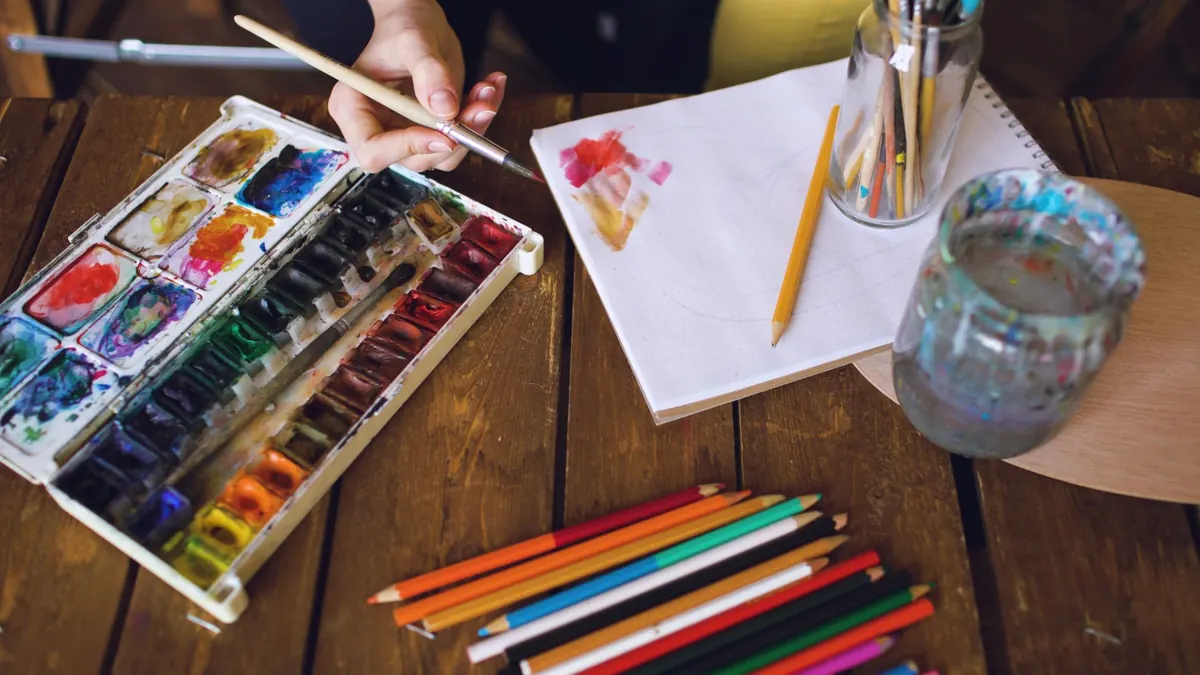
Two sketchers stop at the same corner, where a narrow alley climbs between lime-washed walls and the morning light rakes across the stone. One uncaps a fountain pen and starts drawing. The other opens a tin of watercolor pencils, picks out a warm grey, and begins laying tone on its side. An hour later both have a drawing worth keeping, but the drawings do not look alike, and the hours did not feel the same. That is the whole comparison in miniature: same alley, same light, two different sets of decisions.
Speed: The First Ten Minutes and the Last Ten
Ink and wash is fast in a particular way. The line comes first, and it comes quickly — twenty seconds for a doorway arch if your hand is warm. Once the drawing is legible, you can wet a brush and drop a single grey wash across the shaded side of the wall. The sketch reads as finished before the paper is even dry. If the light is moving, this matters: you catch the shape of the shadow before it slides up the wall and disappears.
The catch is commitment. A pen line is a decision you keep. There is no lifting a stray mark without leaving a scar in the paper, and there is no lightening a dark wash once a staining ink has sunk in.
Watercolor pencils run slower. You build tone by drawing, and covering the face of a two-storey wall with pigment takes longer than sweeping a brush across it. But nothing is fixed until water touches it. You can stand back, squint, add more pencil to the corner that needs weight, and then fuse it all with a damp brush. For anyone who tends to rush the first five minutes of a sketch, that delay is a gift.
Portability: What Actually Ends Up in the Bag
Both kits are light. The difference is in the failure modes.
An ink kit is a pen, a water brush, and perhaps a small pan of grey or sepia. Three objects, no sharpening, no dust. But the pen needs waterproof, pigment-based ink if you plan to wash over your lines — water-soluble ink will bloom the moment your brush crosses it. That can be beautiful, and it is almost impossible to control. The other risk is the bottle: an open ink bottle in a bag has ruined more sketchbooks than bad drawing ever has.
A pencil kit is a tin of twelve, a water brush, a small sharpener, and a cloth. Nothing leaks. Nothing freezes or evaporates. You can carry it through an airport without a second thought, and you can close the tin in a hurry when the rain starts. The trade-off is maintenance: pencil cores break, wooden casings split, and a dull pencil on rough paper gives you a sulky, scratchy mark instead of the broken texture you wanted.
Texture: How Each Medium Describes Stone
Stone walls are the reason many of us sketch alleys at all. They offer mortar joints, chipped edges, the dark seam under a lintel, the pale face where sun hits, the stain that runs down from a gutter. Each medium describes those surfaces differently.
Ink line handles edges. It states the joint between two blocks with a single confident stroke, and it gives you hatching when you need tone without water. Wash handles mass. Together they produce a graphic, slightly poster-like wall — clearly a wall, but a wall seen from across the street rather than touched. If you want grit, you have to add it deliberately: spatter from a loaded brush, dragging a nearly dry brush over the tooth, or dropping clean water into a damp wash to push the pigment outward.
Watercolor pencils are the opposite. The pigment catches on the tooth of the paper, so a stroke made with the side of the pencil arrives already broken and granular — which is very close to how weathered plaster and rough stone actually look. A light pass with a damp brush fuses the grains without destroying them. Use a paper with some bite; a hot-pressed, satin-smooth sheet throws away the pencil's main advantage.
Test every new pen and pencil on the back page of your sketchbook before it touches a drawing you care about. Two minutes of testing saves an hour of regret.
Shadows: Value, Layering, and the Mud Problem
Alley sketches live or die on shadows. The railing that throws a hard diagonal across a pale wall, the soft grey pooling under an arch, the deep cool dark at the bend where the light never quite reaches — these are the shapes that make a narrow street feel narrow.
With ink wash, work light to dark and let each layer dry completely. Going back over damp paper lifts the layer beneath and leaves a tideline. Staining inks will not lift at all, which is excellent for holding a dark and miserable for correcting one. Keep a scrap of the same paper beside you; washes dry lighter than they look when wet, and it is easy to overshoot into a flat, chalky grey.
Watercolor pencils let you layer dry on dry without waiting, which is a real advantage when you are standing in a doorway with a cold wind coming up the hill. You can also knock an area back with a damp brush and a tissue if a shadow gets too heavy. Push too far, though, and the result turns muddy and slightly waxy — harder pencils with a strong binder can resist water and leave a film on the surface. Two or three layers is usually plenty.
Cleanup and the Small Disasters
Ink cleanup is quick but fussy. Cap the pen, wipe the nib, and squeeze the water brush until the reservoir runs clear, then wipe the bristles on a cloth. Empty the brush before you fly. Keep any ink bottle in a sealed bag and decant small amounts rather than carrying the whole bottle.
Pencils are almost self-cleaning, with one rule: let them dry before closing the tin. Wet wooden casings swell, pigment smears onto the tray, and the next time you open it you have a sticky mess. Sharpen at home, not over a café table.
Total time at the end of a session: a minute for ink, two for pencils. Neither will decide your medium for you, but the ink bottle's capacity for catastrophe is worth respecting.
Choosing by the Alley, Not by the Supply Shop
Reach for ink and wash when
- The light is moving and you have under an hour.
- You want crisp architectural structure — arches, shutters, stair rails, the geometry of a passage.
- Your paper is sized and heavy enough to take water without buckling.
- You are drawing for reproduction, where strong value contrast survives better than subtle colour.
Reach for watercolor pencils when
- You want to draw tone rather than paint it, building shadows gradually.
- You are standing, walking, or working in cold and wind where a wet brush is unpleasant.
- The subject is surface: crumbling plaster, brick patches, moss in the mortar.
- You want an escape route from your own boldest marks.
A hybrid that works
- Block the big shadow shapes with dry pencil, using the side of the lead. Keep it loose.
- Draw the structure over the top with a waterproof pen — openings, corners, the line where wall meets pavement.
- Touch the pencil areas with a damp brush to melt them, working from light to dark.
- Add final ink darks last, once the paper is dry, so nothing bleeds where you don't want it.
Take One Medium, Learn Its Habits
Try a month with a single medium and ten alley sketches. If you choose ink, spend the month learning how much water your brush holds and how your paper behaves when it is damp. If you choose pencils, learn how much pressure gives you a usable wash and which two colours make your best shadow grey. The point of comparing is not to crown a winner; it is to know, before you sit down on a stone step with an hour of light left, which tool will let you finish the drawing you can actually see.
Photo: Vitaly Gariev / Pexels