
A Pre-Sketch Checklist for Choosing an Alley Composition
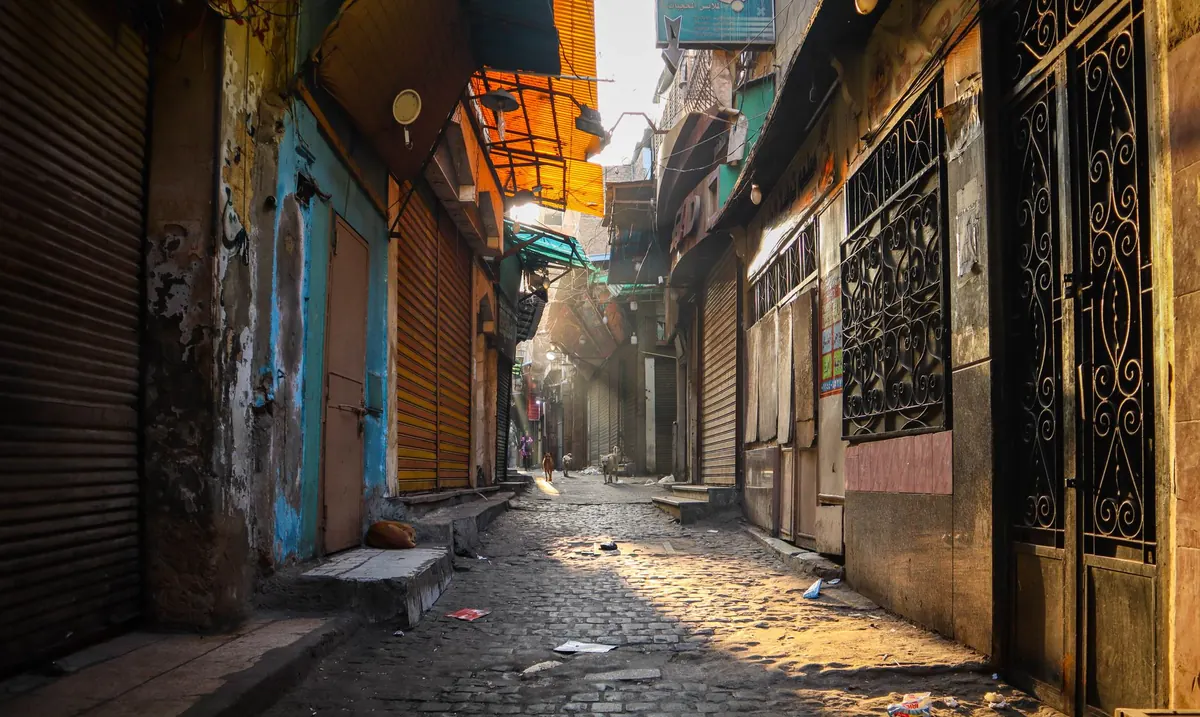
You turn a corner and there it is: a slot of shade, a strip of sun catching a shutter, laundry strung between two walls like bunting, and a bicycle leaning at exactly the angle a bicycle should lean. The hand goes to the sketchbook. Twenty minutes later you are halfway down the page with a tangle of drainpipes and no idea where the drawing is going, and the light you fell in love with has already left the wall.
Alleys are generous subjects and unforgiving ones at the same time. They give you depth, texture, and a natural frame, then bury the good part under bins, cables, and a moped nobody asked for. The difference between a satisfying alley sketch and a muddled one is rarely talent. It is the two or three minutes you spend looking before you open the book. What follows is the routine worth running every time.
Walk the Alley Twice Before You Unpack
The first pass is at normal walking pace, and its only job is to tell you whether the alley is worth a second pass. Look up. Most sketchers arrive with their eyes at door height, then discover on the page that the top third of the scene is a mystery of balconies, wires, and air-conditioning units. Note what is up there. Note the ground too: cobbles, a drain cover, a step worn into a curve.
The second pass is slow, and it has a specific goal — find where the alley changes. A bend, a narrowing, a stone arch, a sudden widening into a small courtyard. Those transitions are what make a narrow street read as narrow rather than as a flat corridor of texture. Mark them in your head as candidate anchors. Then walk to the far end and turn around. Half the time the better composition is the one looking back, because that is the direction with the light behind you instead of in your eyes.
Squint, Then Ask What Is Brightest
Squinting is not a gimmick; it is a value-compression tool. It flattens all that tempting detail into three or four tones and shows you the actual structure of the scene. Do it while facing the alley and ask one question: where is the light landing?
In a narrow street the answer is usually a wall, a section of pavement, or a doorway at the far end. That lit shape is the skeleton of the drawing. Before anything else, decide whether you can hold it. Sunlight in an alley moves faster than you expect, sliding up or down a wall as the angle changes, sometimes disappearing entirely within half an hour. Look at the edge of the shadow and estimate how much room it has left to travel. If the light patch will be gone before your linework is down, either work fast and deliberately or come back another day.
Overcast is not a consolation prize. Flat light in an alley lets you draw shape and clutter honestly, and it does not run away from you. Many sketchers prefer it for exactly that reason.
Framing: Choose Your Four Corners on Purpose
Stand where you first felt the pull of the scene, then take four deliberate steps. Alleys reward small movements more than almost any other subject, because a metre sideways changes the overlap of walls completely.
Useful moves:
- Flatten against one wall. Standing close to the left-hand wall and looking down the right wall exaggerates the perspective and gives you a strong diagonal.
- Back up to the entrance. Framing the alley with a doorway, arch, or dark passage in the foreground gives the eye a threshold to cross.
- Choose vertical or horizontal consciously. Deep, tight alleys often want a vertical page to carry the height of the walls. A wider alley with a strong horizontal element — a bench, a step, a line of stalls — may want landscape.
- Move the turn off-centre. Putting the bend or the lit doorway dead centre usually kills the tension. Thirds are a rough guide, not a law.
Check your corners before you commit. Is there anything dull in the top left that you would rather replace with balcony ironwork? Is the bottom right just grey pavement? You can often fix both by shifting your position half a step and tilting the book.
Sort the Clutter Into Three Piles
An alley is a working space, and it shows. Bins, crates, cables, satellite dishes, potted geraniums, a mop and bucket, a cat that will move. You cannot edit the street, but you can edit your position, and you can edit the drawing.
Mentally sort what you see into three groups. Keep is anything that tells you something true about the place: the worn step, the shrine, the shutter propped open with a brick. Hide is anything you can conceal behind a wall edge, a corner, or a foreground figure simply by moving your feet. Omit is everything else — the cable that crosses the sky at a boring angle, the wheelie bin that blocks the only interesting doorway.
Two practical rules. First, if you are going to omit something large, decide now, not at minute forty when it is already drawn and wrong. Second, keep one piece of honest mess. A perfectly tidy alley looks like a stage set; a single stray crate or leaning broom is what makes the drawing feel inhabited.
Answer the Focal Point Question Out Loud
Here is the test: if you could only draw for ten minutes, what would you draw? Whatever comes back first is your focal point. Everything else in the composition exists to support it.
Common anchors in alley scenes are a lit doorway, a figure walking away, a staircase, a bicycle, a fountain, a distant slice of bright street. If two candidates compete for attention, one of them has to be subordinated. You do that with value, detail, and placement: let the secondary element stay lighter or darker in contrast, keep it looser, and push it toward an edge. A drawing with two equal focal points reads as a drawing with none.
If you cannot name the subject in one short sentence, you are not looking at a composition yet — you are looking at a view.
The Thirty-Second Field Checklist
Run this before the first line goes down, and run it again at the halfway point of the drawing.
- Can I name the focal point in one sentence?
- Where is the darkest dark, and is it near my focal point?
- Does the light patch have time to stay put while I draw?
- Have I chosen vertical or horizontal deliberately?
- Is the alley's turn, arch, or narrowing somewhere other than dead centre?
- Is there one honest piece of clutter left in the scene?
- Am I standing where people can still get past, and out of a doorway?
Before You Commit to the Page
Make two or three thumbnails, each no bigger than a matchbox. They take ninety seconds and they will save you an hour. Mark the light direction with an arrow in the corner of the page, note the time, and decide in advance what you will leave out. Then sit down properly — not in a doorway, not in the middle of the lane — and start with the shadow edge rather than the details.
If the checklist comes back full of blanks, that is not a failure. It is the street telling you it is a good place to drink a coffee and a poor place to draw. Walk on. There is always another alley, and the next one may already have its light in the right place.
Photo: karya Buck / Pexels